Bamboo
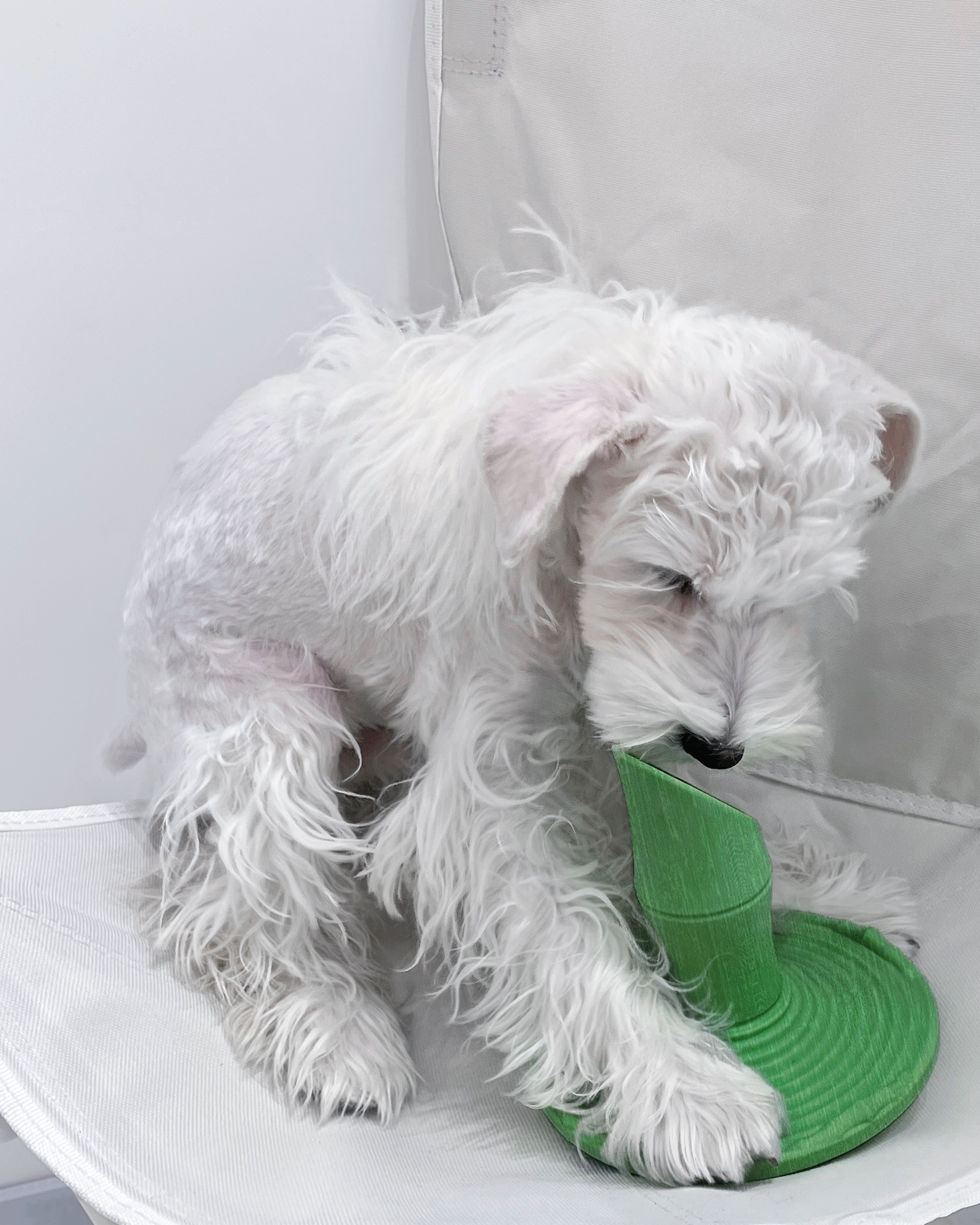
A sustainable dog toy made from bamboo.
Kean University X Benebone
Student Project - Individual Work
October - December, 2023
Bamboo is an environmentally friendly dog toy. It is made from bamboo, which is biodegradable and has a short-growing cycle.
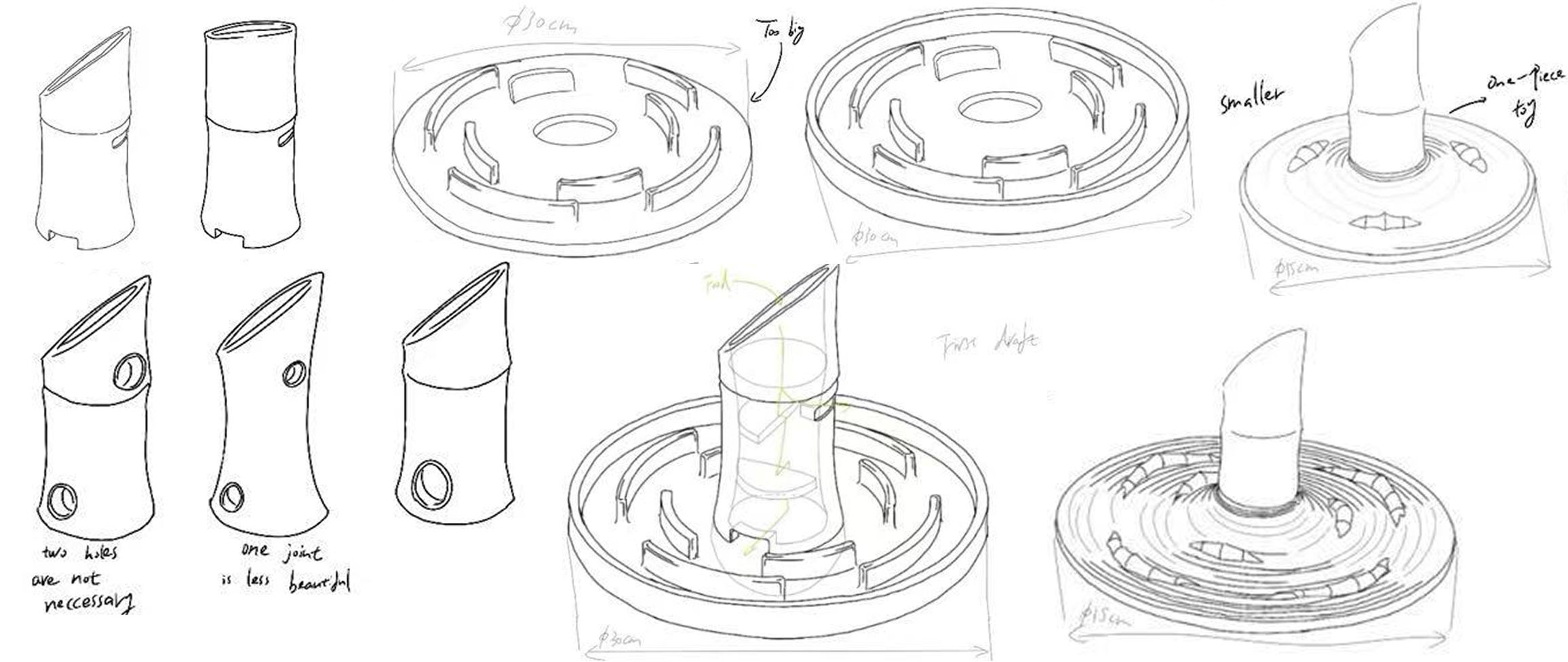
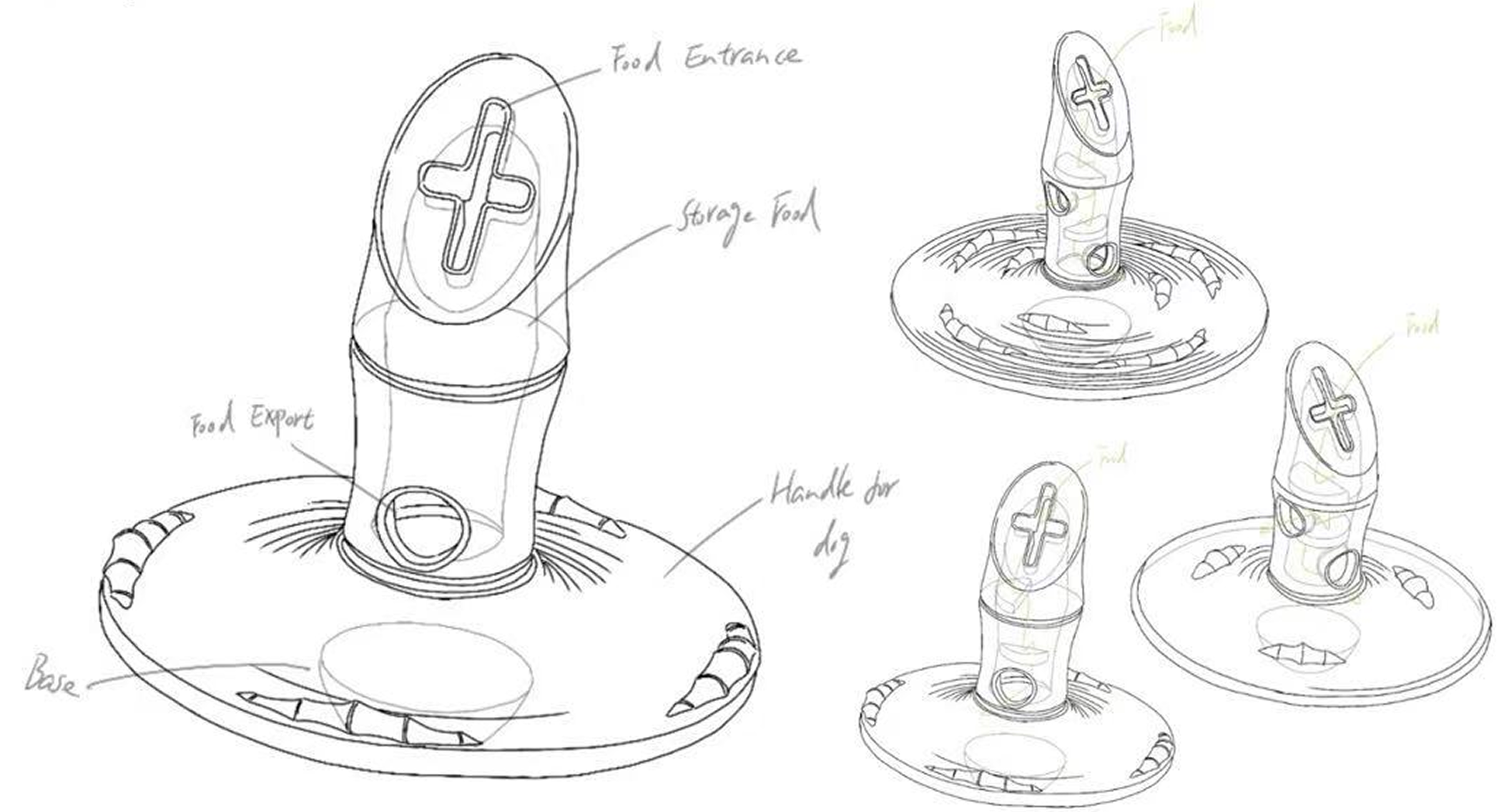
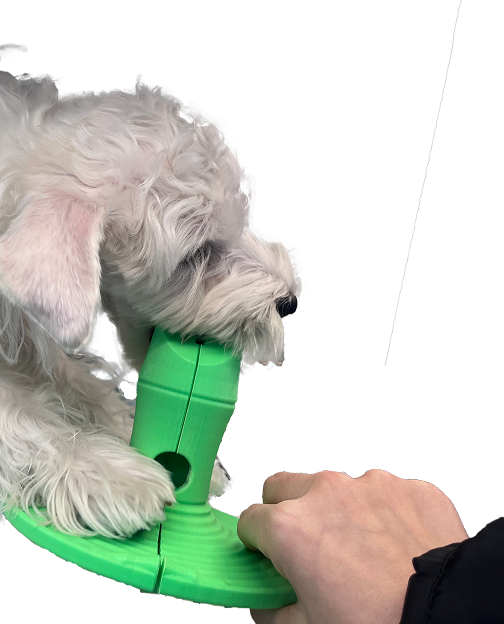
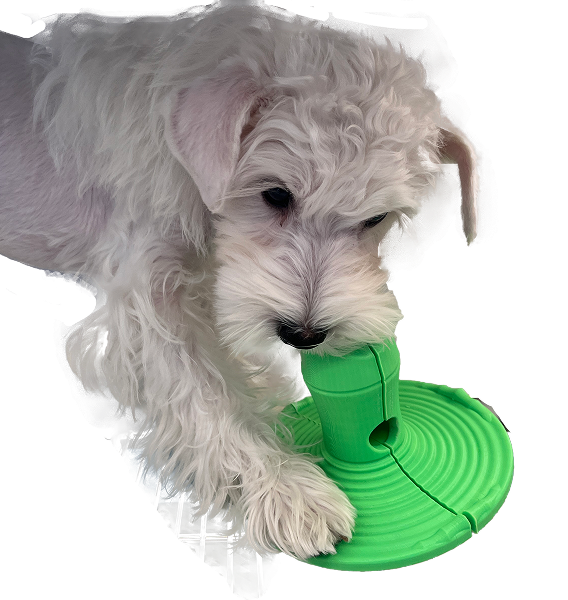
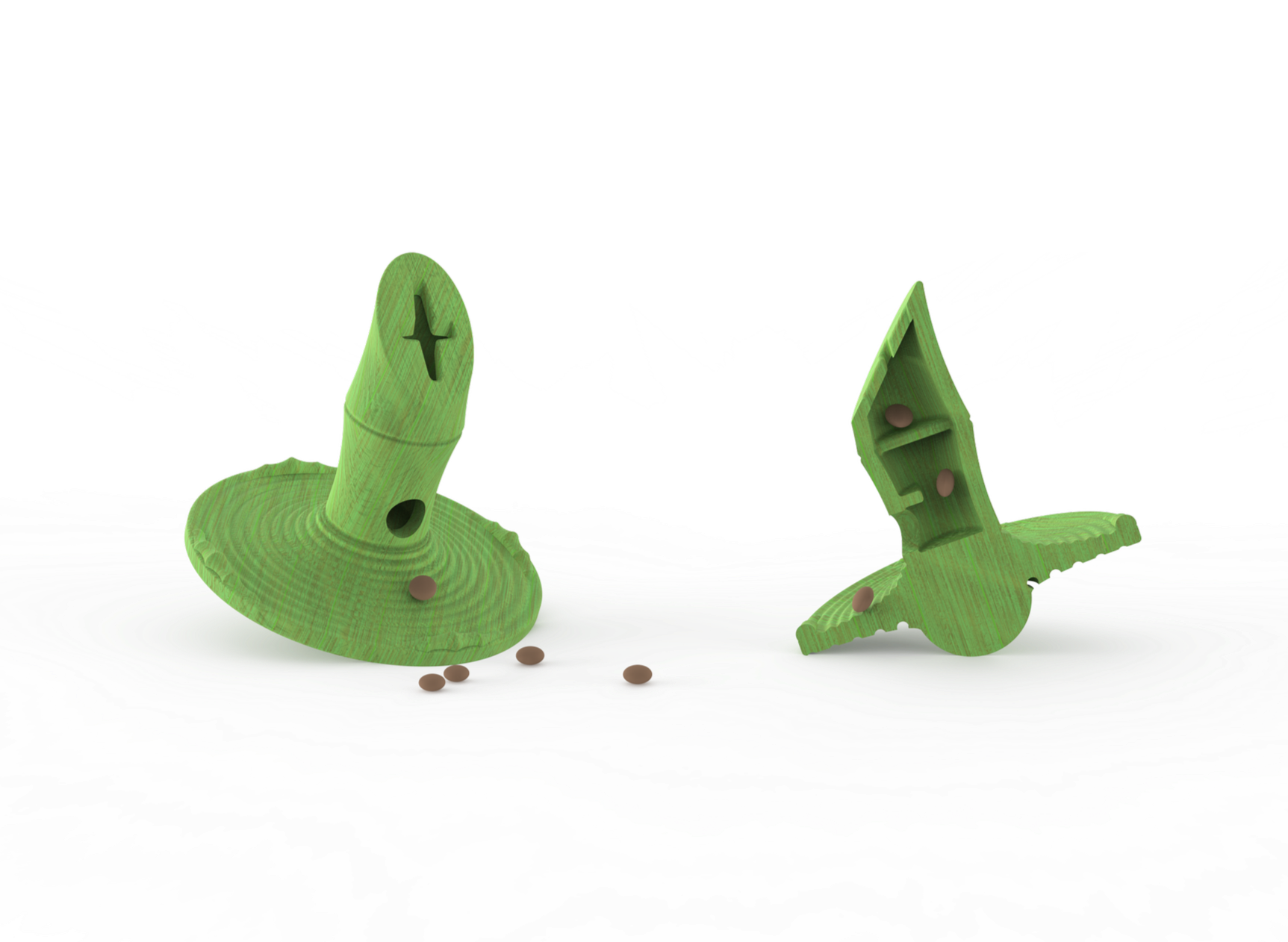
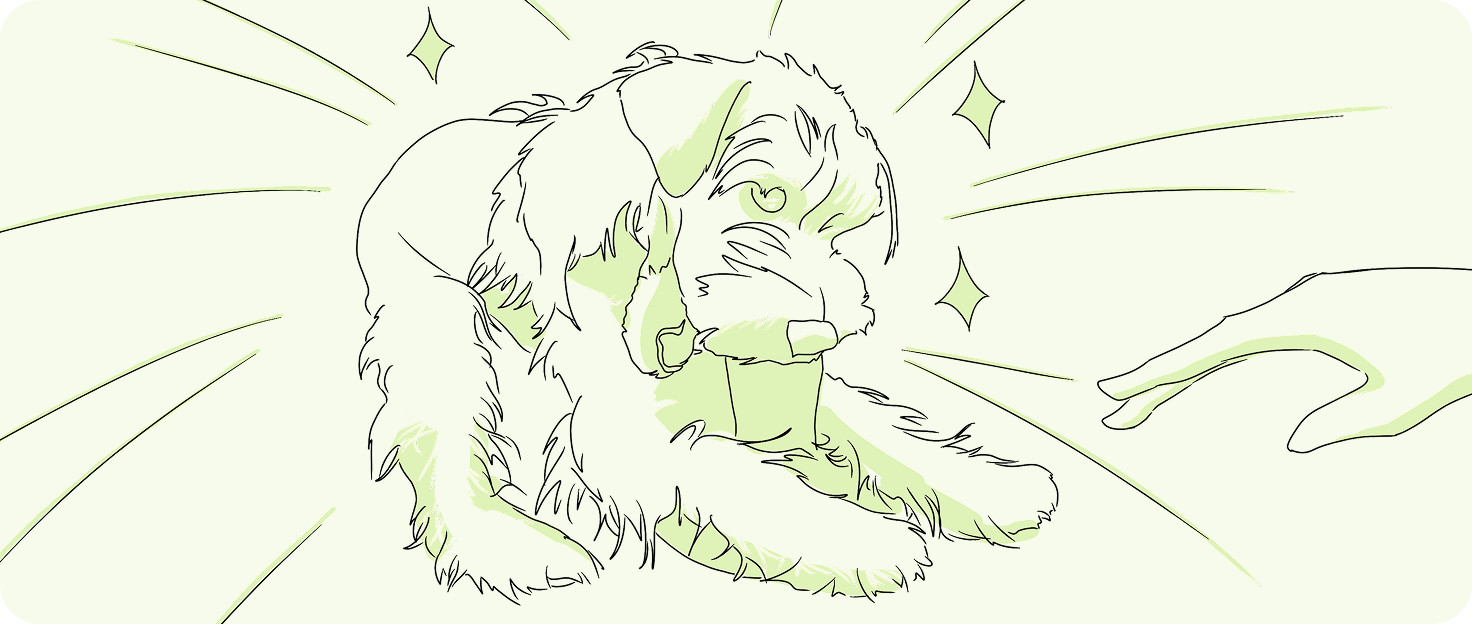
The hollow structure makes it a food-leaking toy. The disc makes it rotate like a tumbler to attract dogs, and allows the dog's paws to hold it.
Bamboo allows owners who don’t have enough energy to play with their dogs to take a break and let their dogs entertain themselves.
Potential and Problems
The Global Pet Toys Market reached US$8 billion in 2022 and is projected to witness lucrative growth by reaching up to US$13 billion by 2030. The market is expected to exhibit a CAGR of 6.5% during the forecast period 2023-2030.
In 2022, dogs accounted for the largest share of the pet toy market at 49.4%. In the same year, the North American pet toy market achieved the largest market share of 32.5%.
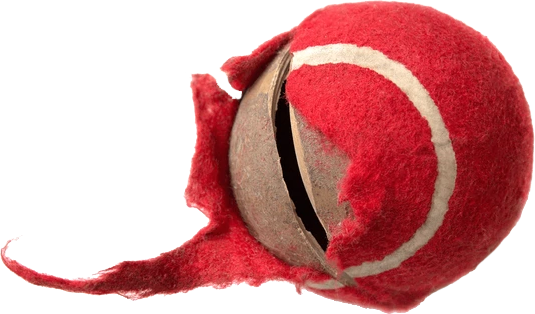
However, every year, an estimated 634 million dog toys end up in our landfills, which is equivalent to 40,500 tons of waste. These numbers are a result of planned obsolescence due to their short life cycles.
Materials for toys
Nowadays, most pet toys are made of plastic, latex, natural rubber, artificial rubber, nylon, fibers, and ropes. Most materials for toys are not biodegradable, or the raw materials (Latex and Natural Rubber) are insufficient, resulting in problems with mass production.

Biodegradable Material
Hemp is durable, non-toxic, antibacterial, and mass-producible, making it suitable for a rope toy.
Organic cotton is non-toxic, has no chemical pesticides, but has a high cost for production. It's suitable for a comfort toy, rope toy, and squeaky toy.
Bamboo is mass-producible, natural antibacterial, non-toxic, durable, andsuitable for the Fetch toy and Chew toy.
Wool is non-toxic, abundant, and helps clean the teeth. It's suitable for a comfort toy.
Low cost
Bamboo
Durable

Easy to clean
Hemp
Abundant
High tempreture resistant
Organic Cotton
Wool
User Research Summary
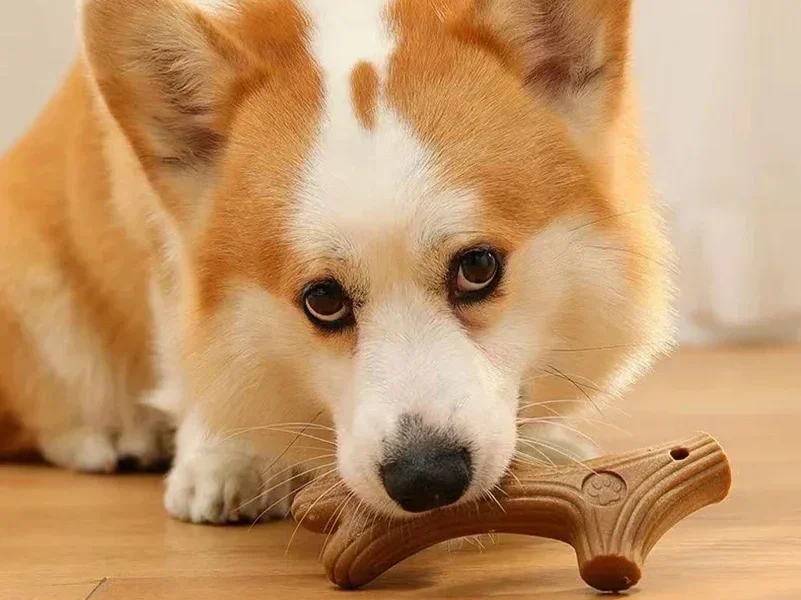
The survey indicates that most dog owners have small to medium-sized dogs, mainly aged 1–4 years old. Each dog typically owns 5–6 toys at the same time. Nearly half of the dogs destroy a toy within one month, and chew toys are identified as the most preferred toy category among dogs.
In follow-up interviews, participants expressed a strong desire for toys that allow dogs to expend energy and entertain themselves independently, as owners may not always have sufficient time or energy to actively play with their dogs. Some owners also mentioned the need for more diverse forms of entertainment, beyond conventional single-function toys.
Although chew toys are highly favored, owners usually purchase new toys only every 4–6 months, revealing a mismatch between dogs’ strong chewing needs, owners’ availability, and the durability and replacement cycle of existing products. This insight highlights an opportunity to design chew toys that better support self-directed play, variety, and long-term engagement.

Emma
26 | Director who has intense bursts of work sometimes.
I care about the environment, and I have a one-year-old dog. I am busy at work, feeling too tired to play with BooBoo sometimes.
“

Energy
Strength
BooBoo
3 | A playful small dog
Hope
Hope toys can allow dogs to play alone.
Hope toys can drain a dog's energy.
Hope to have more choices for sustainable toys.
Energy
Strength
Attracting Method
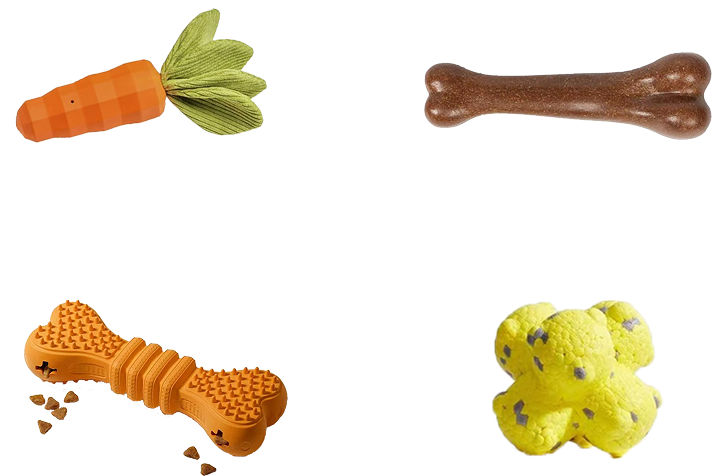
Existing dog toys attract dogs through sound, flavor, movement, or food, and analysis shows that movement-based and food-dispensing strategies are most compatible with bamboo-based chew toys, while sound, flavor infusion, and elasticity-dependent approaches are not.



Testing
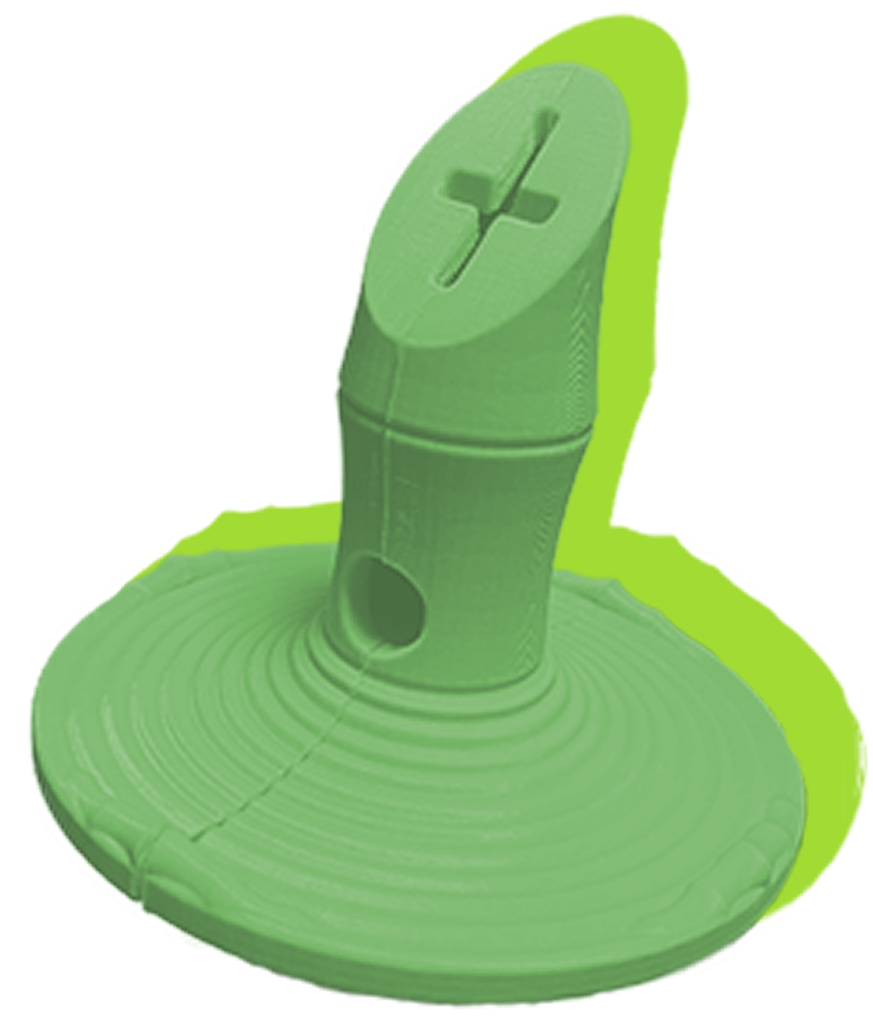
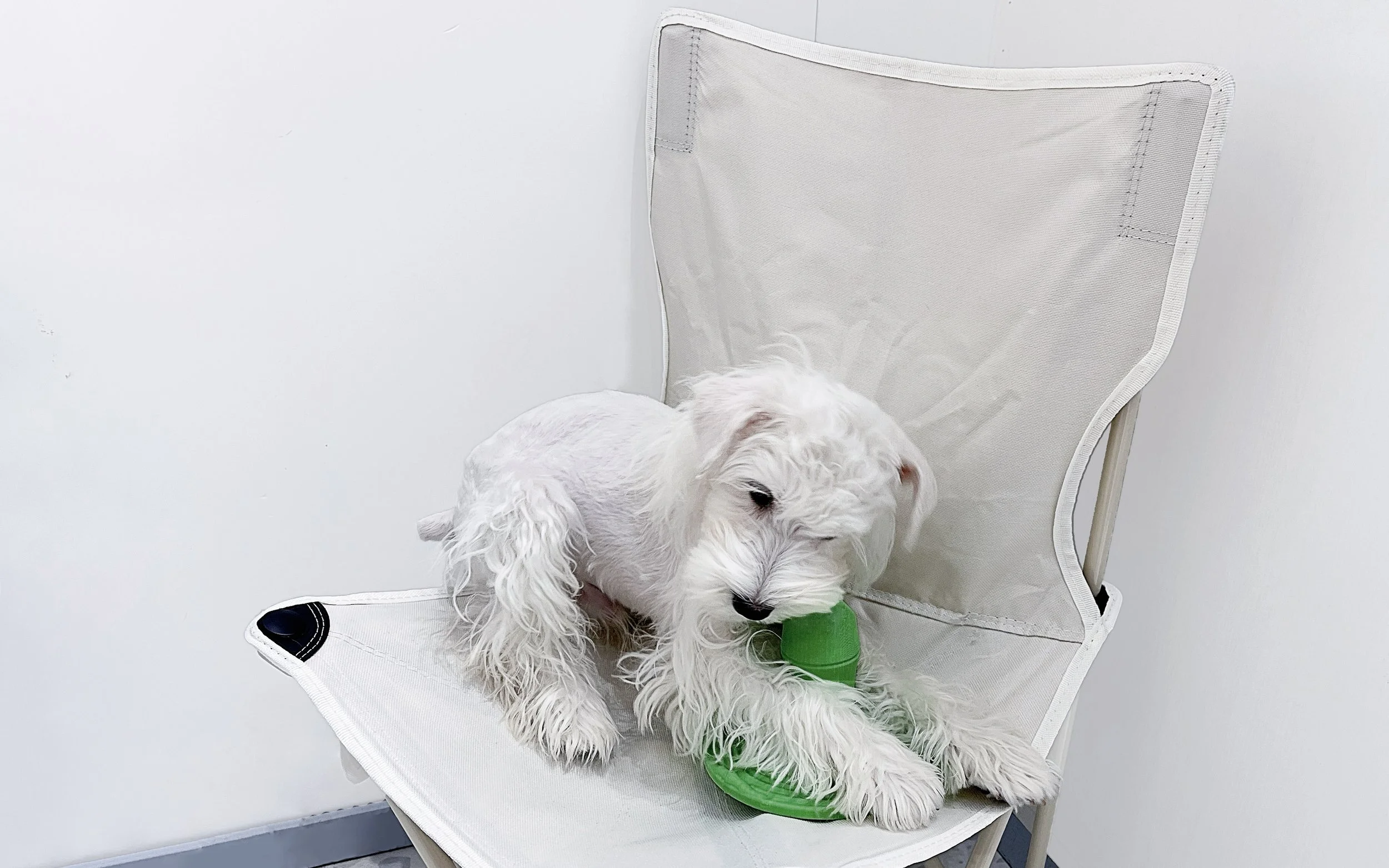
The final prototype is a combination disk and leaky toy with a hemisphere at the bottom that allows the toy to be pushed and rotated. It can be used on both sides, and the toy is reduced in half to fit the dog's paws.
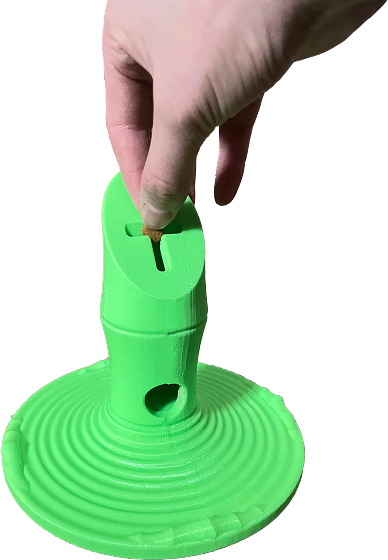
The prototype is easy for dogs to hold down with their paws, the bamboo length is well-suited for chewing, and owners can safely retrieve the toy from a dog’s mouth; however, the food opening initially required precise sizing, so the final model was refined with a larger center and narrower sides to accommodate different sizes of dog food.

1

2
3